 Blog
Blog
Military Calisthenics: Exercises, Training Methods and Physical Endurance
Military fitness prepares the body for demands that rarely occur under ideal conditions. Soldiers may need to climb obstacles, move equipment, cross difficult terrain, or perform strenuous tasks after hours of activity. Strength matters, but so does the ability to sustain physical effort when fatigue sets in. Military calisthenics develops these qualities through bodyweight exercises, repeated movements, and progressive conditioning.
Push-ups, pull-ups, squats, and core exercises form the foundation. Circuits and timed sessions add cardiovascular demands while challenging muscular endurance. The same principles work outside military settings. With limited equipment and a structured military workout routine, civilians can improve physical capacity without relying on a gym. Progress depends on selecting suitable exercises, maintaining technique, and increasing training demands at a manageable pace.
What Is Military Calisthenics?
Military calisthenics refers to bodyweight exercises used in military physical training to develop strength, muscular endurance, coordination, and general fitness. Sessions may involve group instruction, repeated sets, or timed activities designed to improve performance under physical stress. Military physical training, commonly called PT in the United States, extends beyond calisthenics. Depending on the service and training program, it may include running, resistance training, obstacle courses, loaded marches, and other activities related to operational readiness. Calisthenics exercises remain valuable because they require little equipment and accommodate large groups. Push-ups, pull-ups, squats, lunges, planks, and burpees can be performed in training fields, barracks, or outdoor facilities. Training and testing serve different purposes.
Physical assessments measure selected abilities against established military fitness standards, while regular workouts develop the capacities needed to improve performance. Practicing test movements alone does not necessarily prepare someone for every physical demand of military service. Requirements also vary between organizations. The U.S. Army, Marine Corps, Navy, and other services maintain different assessments and training priorities. No universal repetition target or workout represents military calisthenics as a whole. The underlying objective is physical readiness: developing strength and endurance that remain useful when conditions become demanding.
How Military Calisthenics Differs From Gym Training
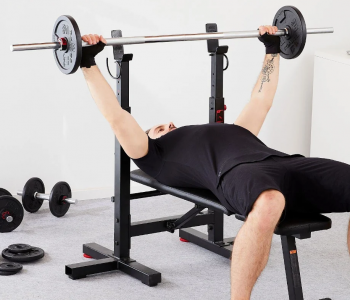
Equipment is the clearest distinction. Conventional strength programs frequently use barbells, dumbbells, cables, and machines to adjust resistance. Military bodyweight training relies primarily on the trainee’s own weight, making it practical wherever exercise facilities are limited. Workout organization can differ as well. A conventional strength session might emphasize heavy lifts with several minutes of recovery between sets. Military-style circuits often combine upper-body, lower-body, and core exercises with shorter rest periods. Consider five sets of five heavy bench presses. The trainee rests long enough to maintain force production across sets. A circuit combining push-ups, squats, planks, and burpees creates a different challenge: less external resistance, repeated movements, and greater work density. Neither approach is inherently superior. Their value depends on the training objective.
| Training factor | Military-style calisthenics | Conventional gym training |
| Primary resistance | Body weight | External weights and machines |
| Common emphasis | Relative strength, muscular endurance, conditioning | Strength, muscle growth, or endurance |
| Equipment | Usually minimal | Varies by program |
| Progression | Repetitions, leverage, tempo, exercise difficulty | Load, repetitions, sets, tempo |
| Workout format | Often circuits or timed intervals | Individual sets, circuits, or specialized programs |
| Main limitation | Resistance can be difficult to increase precisely | Equipment access and portability |
Bodyweight strength can still reach impressive levels. Pull-ups, dips, single-leg squats, and demanding push-up variations provide substantial resistance when performed correctly. External weights offer advantages when maximal strength becomes the priority. Barbells and dumbbells allow resistance to increase in small, measurable increments. Heavy lower-body development and preparation for carrying substantial loads also benefit from appropriately programmed resistance training. Effective military fitness training can combine both methods rather than treating them as competing approaches.
Core Exercises Used in Military Physical Training
A relatively small selection of movements covers the foundations of military calisthenics. Upper-body pushing and pulling, squatting, lunging, and trunk stabilization address several important physical demands. Exercise difficulty should match the trainee’s current ability. A simpler movement performed correctly is generally more productive than an advanced variation completed with poor control.
Push-Ups, Pull-Ups and Dips
Push-ups strengthen the chest, triceps, and shoulders while requiring the trunk and hips to remain stable. Place your hands slightly wider than shoulder-width apart and extend your legs behind you. Keep your head, shoulders, hips, and heels aligned. Lower your chest under control, then press upward without allowing your hips to sag or rise excessively. Beginners can use incline push-ups against a sturdy elevated surface. Standard push-ups provide the next step, followed by more demanding decline or uneven-hand variations. Pull-ups develop the latissimus dorsi, upper-back muscles, and elbow flexors. Begin with extended arms and controlled shoulder positioning. Pull until your chin clears the bar, then lower smoothly without swinging. Assisted pull-ups, horizontal rows, and controlled eccentric repetitions help build the strength needed for full repetitions. Dips primarily challenge the triceps, chest, and anterior shoulders. They are commonly performed on parallel bars, with the body supported between the hands. Lower only as far as shoulder mobility and control comfortably allow. Forcing excessive depth can increase shoulder stress. Trainees experiencing discomfort can use suitable push-up variations instead. Suggested starting workloads include:
- Push-ups: 2–4 sets of 8–20 repetitions.
- Pull-ups: 2–4 sets of 3–8 repetitions, assisted when necessary.
- Dips: 2–3 sets of 5–12 controlled repetitions.
These ranges are general training examples, not official military standards. Movement quality should determine the appropriate workload.
Squats, Lunges and Core Exercises
Lower-body exercises develop muscles involved in climbing, running, jumping, and changing direction. They also establish a foundation for more demanding activities involving external loads. Bodyweight squats primarily challenge the quadriceps and glutes while requiring coordinated movement at the hips, knees, and ankles. Stand with your feet approximately shoulder-width apart. Bend your hips and knees, lower into a controlled squat, and return to standing while keeping your feet planted. Choose a depth that allows stable, comfortable movement. Lunges emphasize one leg at a time. Forward, reverse, and walking variations develop the quadriceps and glutes while challenging balance and pelvic control. Reverse lunges are particularly useful for beginners because stepping backward often makes the movement easier to control. Core exercises complement lower-body training by improving trunk stability. Useful options include:
- Front planks: Resist excessive spinal extension.
- Side planks: Develop lateral trunk stability.
- Dead bugs: Reinforce trunk control during arm and leg movement.
- Bird dogs: Challenge stability through alternating limb extension.
- Reverse crunches: Train controlled abdominal movement.
Sit-ups also appear in some military assessments and training routines. They develop abdominal endurance but should not be the only core exercise in a program. Using different movement patterns provides more balanced trunk training than relying exclusively on high-repetition sit-ups.
Building Strength and Muscular Endurance Without Weights
Muscular strength concerns the capacity to produce force. Muscular endurance describes the ability to sustain or repeat muscular contractions over time. A trainee completing five demanding pull-ups demonstrates a different physical quality from someone performing 40 continuous push-ups. Training should reflect the intended outcome. For strength, select a challenging variation that allows relatively few controlled repetitions. Longer recovery periods help preserve performance. For muscular endurance, use manageable resistance and higher repetition targets. Repeated sets and accumulated workload become more important.
Progression may involve additional repetitions, greater range of motion, reduced assistance, or more difficult leverage. Slowing the lowering phase can increase time under tension, although slower repetitions are not automatically more effective. When strength is the priority, advancing to a harder movement is often preferable to endlessly increasing repetitions. Higher repetition targets remain useful when developing endurance for physical assessments.
How Military Calisthenics Workouts Are Structured
Military workout routines use several straightforward formats. Some emphasize repeated sets of individual movements, while others combine exercises into circuits or organize work around timed intervals. A typical session begins with a warm-up, continues into the main training block, and finishes with lower-intensity movement. The main block determines whether the session primarily develops strength, muscular endurance, or conditioning.
Circuit Training and Timed Sets
Circuit training organizes several exercises into a sequence. Participants complete each movement before repeating the circuit for a prescribed number of rounds. A basic circuit might include:
- 12 push-ups.
- 20 bodyweight squats.
- 8 reverse lunges per leg.
- 30 seconds of front planks.
- 6 burpees.
Rest for 60–120 seconds after completing the circuit. Three rounds provide a manageable full-body session for someone familiar with the exercises. Timed sets offer another approach. Participants might work for 30 seconds, recover for another 30 seconds, and move to the next station. This format simplifies group training because everyone follows the same schedule. However, identical intervals do not create identical demands. An experienced trainee may find 30 seconds of push-ups manageable, while a beginner reaches muscular fatigue much sooner. Adjusting exercise difficulty and repetition pace allows participants with different abilities to follow the same structure. Timed circuits contribute to functional fitness and conditioning, but they cannot replace every form of cardiovascular training. Sustained running and dedicated aerobic intervals address demands that short bodyweight circuits may not fully develop.
Repetitions, Rest and Training Intensity
Exercise difficulty, repetition count, and recovery time determine much of a workout’s training effect. Ten demanding push-ups can require more effort than 25 incline push-ups. Likewise, squats performed after several rounds of burpees create a different challenge from the same repetitions completed while fresh. Three concepts help explain these differences: Resistance describes the mechanical difficulty of an exercise. Effort reflects how close a set comes to muscular failure. Training density concerns how much work is completed within a given period. Shorter rest periods increase workout density and often raise cardiovascular demand. Longer breaks help preserve performance during difficult strength exercises.
| Training emphasis | Typical working range | Rest between sets |
| Strength-focused exercises | 3–8 challenging repetitions | 2–3 minutes |
| General muscular development | 6–15 repetitions | 60–120 seconds |
| Muscular endurance | 15–30 or more repetitions | 30–90 seconds |
| Conditioning circuits | 20–45 seconds of work | Adjusted to fitness level |
These ranges are programming guidelines rather than fixed physiological boundaries. Effort can also be monitored through a strength-training rating of perceived exertion (RPE). A set rated around 7–8 generally leaves approximately two or three repetitions in reserve. Training every set to failure is unnecessary. Preserving some capacity helps manage fatigue, especially when calisthenics is combined with running or other demanding activities.
A Sample Military Calisthenics Workout
This military calisthenics workout is intended for generally healthy adults with basic exercise experience. It combines pushing, pulling, lower-body movements, trunk stability, and conditioning. The session is an illustrative workout rather than an official military training protocol. Warm-Up: 6–8 Minutes Begin with brisk walking or light jogging. Follow with arm circles, controlled bodyweight squats, alternating lunges, and several easy push-ups. The warm-up should prepare the body for exercise without creating significant fatigue. Main Circuit: 3 Rounds
| Exercise | Workload |
| Push-ups | 12–15 repetitions |
| Pull-ups or assisted pull-ups | 4–8 repetitions |
| Bodyweight squats | 20 repetitions |
| Reverse lunges | 10 per leg |
| Front plank | 30–45 seconds |
| Burpees | 6–10 repetitions |
Rest for approximately 20–40 seconds between exercises when necessary. After each round, recover for 90–120 seconds. Reduce repetitions or select easier variations if fatigue prevents consistent technique.
- Conditioning Finisher: 4 Minutes Alternate 30 seconds of brisk marching or jogging in place with 30 seconds of easy walking. Repeat four times. Keep the pace manageable after the main circuit. This short block adds conditioning work but does not replace dedicated aerobic training.
- Cool-Down: 3–5 Minutes Walk slowly until breathing settles. Gentle mobility exercises can follow. The workout takes about 25–45 minutes, depending on rest periods and exercise modifications. Beginners can complete two rounds, substitute incline push-ups, and use horizontal rows instead of pull-ups. Experienced trainees may increase exercise difficulty or add another round.
Progressing From Beginner to Advanced Training
Progressive overload means gradually increasing training demands as physical capacity improves. As fitness improves, an unchanged routine may no longer provide enough stimulus for further progress. Beginners should first establish reliable technique and a workload they can recover from. Elevated push-ups, assisted rows, basic squats, and short plank holds provide accessible starting points. Once an exercise becomes manageable, increase repetitions within a defined range.
After consistently reaching the upper target, consider a harder variation. For example, begin with three sets of eight push-ups. Progress toward three sets of 12 while keeping approximately two or three repetitions in reserve. When that workload becomes comfortable, introduce a more challenging movement.
| Training level | Push-up progression | Pulling progression | Lower-body progression |
| Beginner | Incline push-ups | Assisted horizontal rows | Bodyweight squats |
| Intermediate | Standard push-ups | Assisted or standard pull-ups | Reverse and walking lunges |
| Advanced | Decline or uneven-hand push-ups | More difficult strict pull-ups | Split squats and controlled single-leg variations |
These categories describe exercise difficulty rather than formal military classifications. Advanced movements require sufficient mobility, balance, and joint control. Previous injuries or individual limitations may make certain exercises unsuitable. Progression must also account for other physical activities. Someone already running frequently or completing loaded marches may require less additional leg conditioning than a person whose only exercise is calisthenics.
Advanced military conditioning can introduce obstacle training, sprint intervals, and loaded movement. Each requires appropriate preparation and develops qualities beyond basic bodyweight strength. The objective is measurable improvement without accumulating more fatigue than the trainee can recover from.
Recovery and Injury Prevention
Bodyweight exercises do not eliminate injury risk. Repeated push-ups, dips, squats, and burpees place cumulative stress on muscles, tendons, and joints, especially when training volume increases rapidly. Shoulders, elbows, and wrists experience repeated loading during upper-body movements. Lower-body exercises can contribute to overuse problems when combined with frequent running, jumping, or loaded activity. Managing total workload is essential. Increasing rounds, reducing rest periods, and selecting harder exercises simultaneously can create excessive fatigue. Technique also matters late in a session. As fatigue develops, trainees may lose trunk control during push-ups, shorten their range of motion, or land heavily during burpees. Reducing the pace or ending the set is preferable to accumulating uncontrolled repetitions. Recovery needs vary with exercise intensity, training history, and other activities.
Many recreational trainees benefit from approximately 48 hours between demanding full-body strength sessions, although lighter exercise can often be performed between them. Sleep, sufficient energy intake, protein, and hydration support adaptation to training. Muscle soreness after unfamiliar exercise is common but does not reliably indicate workout effectiveness. Sharp pain, persistent joint discomfort, swelling, or worsening symptoms require a different response. Stop the aggravating activity and seek medical assessment when symptoms persist or suggest an injury. Consistency produces better long-term results than repeatedly training through exhaustion.
FAQ
Is military calisthenics effective for building muscle?
Yes. Bodyweight exercises can stimulate muscle growth when resistance, effort, and training volume are sufficient. Push-ups, pull-ups, dips, and challenging single-leg movements are useful options. External weights make resistance easier to adjust as strength increases.
Can beginners do military calisthenics?
Beginners can start with modified movements and lower training volumes. Incline push-ups, assisted rows, basic squats, and short plank holds provide accessible options. Difficulty should increase as strength and movement control improve.
How often should you do military calisthenics?
Two or three full-body sessions per week provide a practical starting point for many recreational trainees. More frequent training is possible when workload and recovery are managed appropriately. Other physical activities should also be considered.
Is military calisthenics better than weightlifting?
Neither is universally better. Calisthenics develops relative strength, muscular endurance, and body control with limited equipment. Weightlifting allows more precise resistance adjustments and is particularly useful for maximal strength development.
Does military calisthenics include running?
Running is common in military physical training but is not technically a calisthenics exercise. Military conditioning often combines running and bodyweight workouts to develop different aspects of physical readiness.
Can military calisthenics replace gym workouts?
For general fitness, relative strength, and muscular endurance, a well-designed calisthenics program can replace many conventional gym sessions. Additional resistance training remains useful for maximal strength, specialized muscle development, and preparation for carrying heavy loads.